What do scientists refer to as a smart guess?

Race Is a Social Construct, Scientists Argue
Racial categories are weak proxies for genetic diversity and need to be phased out
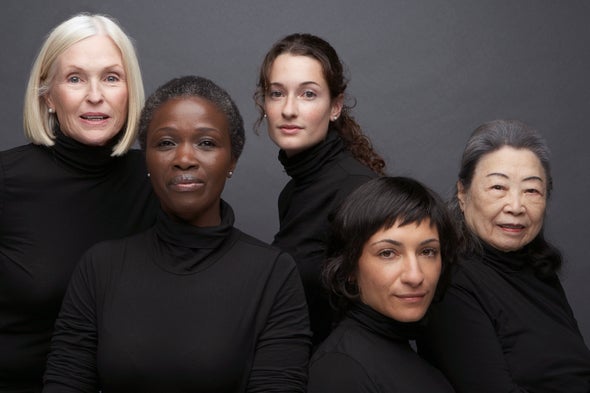
More than 100 years ago, American sociologist W.Due east.B. Du Bois was concerned that race was being used equally a biological explanation for what he understood to be social and cultural differences between unlike populations of people. He spoke out against the idea of "white" and "black" as detached groups, claiming that these distinctions ignored the scope of man diversity.
Science would favor Du Bois. Today, the mainstream conventionalities among scientists is that race is a social construct without biological meaning. And notwithstanding, you lot might nevertheless open up a study on genetics in a major scientific journal and find categories like "white" and "blackness" being used as biological variables.
In an article published today (Feb. four) in the journal Scientific discipline, four scholars say racial categories are weak proxies for genetic multifariousness and need to be phased out. [Unraveling the Human Genome: 6 Molecular Milestones]
They've called on the U.Due south. National Academies of Sciences, Engineering and Medicine to put together a panel of experts across the biological and social sciences to come with ways for researchers to shift away from the racial concept in genetics research.
"Information technology's a concept we think is as well rough to provide useful data, it'southward a concept that has social meaning that interferes in the scientific agreement of human genetic multifariousness and it'due south a concept that we are non the first to call upon moving away from," said Michael Yudell, a professor of public health at Drexel University in Philadelphia.
Yudell said that mod genetics inquiry is operating in a paradox, which is that race is understood to be a useful tool to elucidate human genetic diversity, but on the other hand, race is also understood to exist a poorly defined marker of that diversity and an imprecise proxy for the relationship betwixt ancestry and genetics.
"Essentially, I could not agree more than with the authors," said Svante Pääbo, a biologist and director of the Max Planck Institute for Evolutionary Anthropology in Germany, who worked on the Neanderthal genome but was not involved with the new newspaper.
"What the study of complete genomes from different parts of the world has shown is that even between Africa and Europe, for example, there is not a single absolute genetic difference, significant no single variant where all Africans have one variant and all Europeans another 1, even when contempo migration is disregarded," Pääbo told Live Science. "It is all a question of differences in how frequent different variants are on unlike continents and in dissimilar regions."
In one example that demonstrated genetic differences were non stock-still forth racial lines, the full genomes of James Watson and Craig Venter, two famous American scientists of European ancestry, were compared to that of a Korean scientist, Seong-Jin Kim. Information technology turned out that Watson (who, ironically, became ostracized in the scientific community subsequently making racist remarks) and Venter shared fewer variations in their genetic sequences than they each shared with Kim.
Assumptions about genetic differences between people of different races have had obvious social and historical repercussions, and they still threaten to fuel racist beliefs. That was apparent two years ago, when several scientists bristled at the inclusion of their research in Nicholas Wade's controversial book, "A Troublesome Inheritance" (Penguin Printing, 2014), which proposed that genetic selection has given rise to singled-out behaviors among different populations. In a letter of the alphabet to The New York Times, 5 researchers wrote that "Wade juxtaposes an incomplete and inaccurate account of our research on human genetic differences with speculation that recent natural selection has led to worldwide differences in IQ test results, political institutions and economical evolution."
The authors of the new Science article noted that racial assumptions could also exist especially unsafe in a medical setting.
"If you lot brand clinical predictions based on somebody's race, y'all're going to be wrong a good chunk of the time," Yudell told Live Scientific discipline. In the paper, he and his colleagues used the example of cystic fibrosis, which is underdiagnosed in people of African ancestry because it is idea of equally a "white" affliction. [The Best Genealogy Software for Tracing Your Family unit Tree]
Mindy Fullilove, a psychiatrist at Columbia University, thinks the changes proposed in the Scientific discipline commodity are "badly needed." Fullilove noted that by some laws in the United States, people with one black ancestor of 32 might be chosen "black," but their 31 other ancestors are besides important in influencing their health.
"This is a cogent and important call for us to shift our work," Fullilove said. "It will take an enormous influence. And it will make for better science."
And so what other variables could be used if the racial concept is thrown out? Pääbo said geography might be a meliorate substitute in regions such as Europe to define "populations" from a genetic perspective. However, he added that, in North America, where the majority of the population has come from dissimilar parts of the world during the past 300 years, distinctions like "African Americans" or "European Americans" might still piece of work as a proxy to suggest where a person'south major ancestry originated.
Yudell also said scientists demand to become more than specific with their language, peradventure using terms similar "ancestry" or "population" that might more precisely reflect the human relationship between humans and their genes, on both the individual and population level. The researchers also best-selling that there are a few areas where race as a construct might yet be useful in scientific research: as a political and social, only not biological, variable.
"While nosotros argue phasing out racial terminology in the biological sciences, we also acknowledge that using race every bit a political or social category to study racism, although filled with lots of challenges, remains necessary given our demand to understand how structural inequities and discrimination produce health disparities between groups," Yudell said.
- Genetics by the Numbers: 10 Tantalizing Tales
- 15 Weird Things Humans Do Every Day, and Why
- Top 10 Controversial Psychiatric Disorders
Copyright 2016 LiveScience, a Purch company. All rights reserved. This material may not be published, broadcast, rewritten or redistributed.
Source: https://www.scientificamerican.com/article/race-is-a-social-construct-scientists-argue/
0 Response to "What do scientists refer to as a smart guess?"
Post a Comment